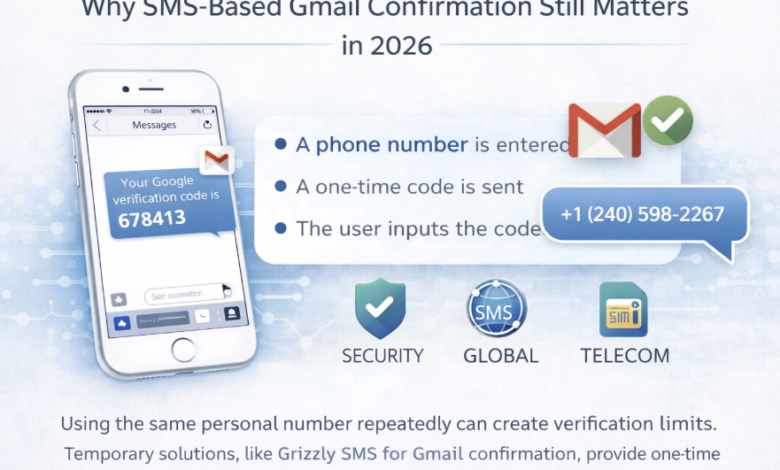
Even in an era of biometrics and app-based authentication, SMS confirmation remains one of the most widely used security layers for email services. Gmail, in particular, frequently requests phone verification when creating new accounts or detecting unusual activity.
For many users, this step feels routine. But behind it lies an important function in the broader telecom ecosystem.
How Gmail Confirmation Works
When Google asks for confirmation during account setup, the process is straightforward:
- A phone number is entered
- A one-time code is sent via SMS
- The user inputs the code
- The account becomes verified
This mechanism helps Google confirm that the account is being created by a real user rather than automated software.
Why SMS Is Still Used
Despite newer authentication technologies, SMS remains popular because:
- it works across all devices
- it does not require additional apps
- it functions internationally
- it relies on standard telecom infrastructure
From a network perspective, SMS verification is reliable and universally supported.
The Challenge of Multiple Gmail Accounts
Many users create more than one Gmail account. Common reasons include:
- separating work and personal communication
- managing secondary projects
- testing online platforms
- organizing subscriptions
However, Google may request phone confirmation for each new account, especially if signups occur close together.
Using the same personal number repeatedly can lead to verification limits or unnecessary linkage between accounts.
See also: Exploring the Role of 3463261143 in Technological Advancements
Temporary Confirmation Options
In situations where users need confirmation for an additional Gmail account but prefer not to attach their primary SIM card, alternative SMS solutions are often considered.
For example, services such as Grizzly SMS for Gmail confirmation are used to receive the required one-time verification code without permanently tying a personal mobile number to a secondary account.
The goal is typically convenience and account separation, not avoidance of security systems.
Telecom Considerations
Phone numbers are long-term identity markers within mobile networks. Once linked to multiple platforms, they can become deeply embedded in digital identity mapping.
Temporary SMS numbers operate differently. They are designed specifically for short-term message reception and account activation processes.
For users who only require verification once during setup, a temporary number can be a practical alternative.
Responsible Usage
It is important to use SMS verification tools responsibly and in accordance with Gmail’s policies. The purpose of phone confirmation is to maintain platform security and prevent abuse.
When used appropriately, temporary confirmation methods support structured account management without compromising security.
Final Note
SMS-based Gmail confirmation continues to play a key role in online identity validation. As users manage multiple accounts across different purposes, understanding how confirmation works — and when temporary solutions are appropriate — becomes part of modern digital literacy.